
Is Your Connected Worker Competent?
The connected worker market is worth $8.6B — but not one platform proves a worker can actually do the job. Here's the blind spot costing manufacturers millions.
Expert perspectives on workforce training, skill verification, and operational excellence.
The connected worker market is worth $8.6B — but not one platform proves a worker can actually do the job. Here's the blind spot costing manufacturers millions.
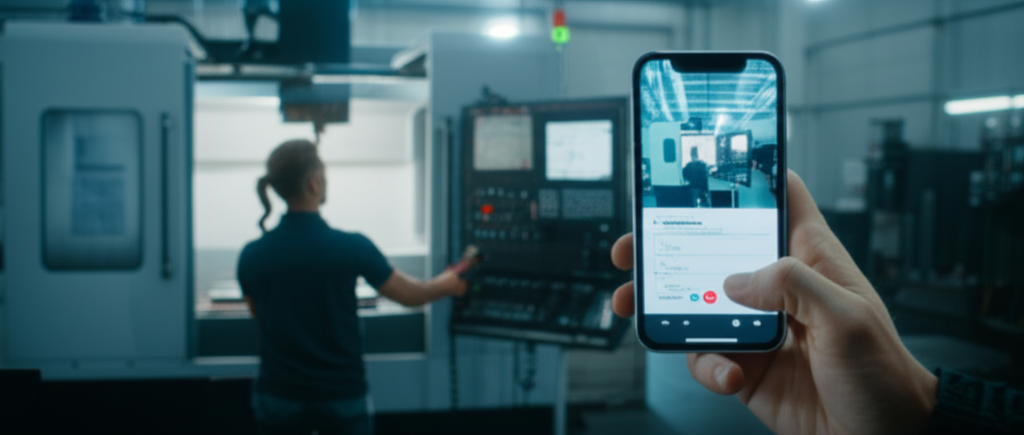
Most manufacturers "verify" competency with a signature on a training record. Real verification means watching the work get done.

VOC is a formal process to confirm a worker can perform a task safely and correctly — not just that they attended training.

Training teaches someone how to do a task. Competency verification proves they can actually do it. Most companies skip the second part.

Spreadsheets, skills matrices, and software can track which operators are qualified. But tracking skills isn't the same as proving them.

No — digital work instructions replace paper, not training. And proving someone can follow the instructions? That's a third thing entirely.

Honest comparison of connected worker platforms — and the gap between AI-personalized content delivery and verified competency.

Honest comparison of digital work instructions platforms — and the gap between capturing process data and proving worker competency.
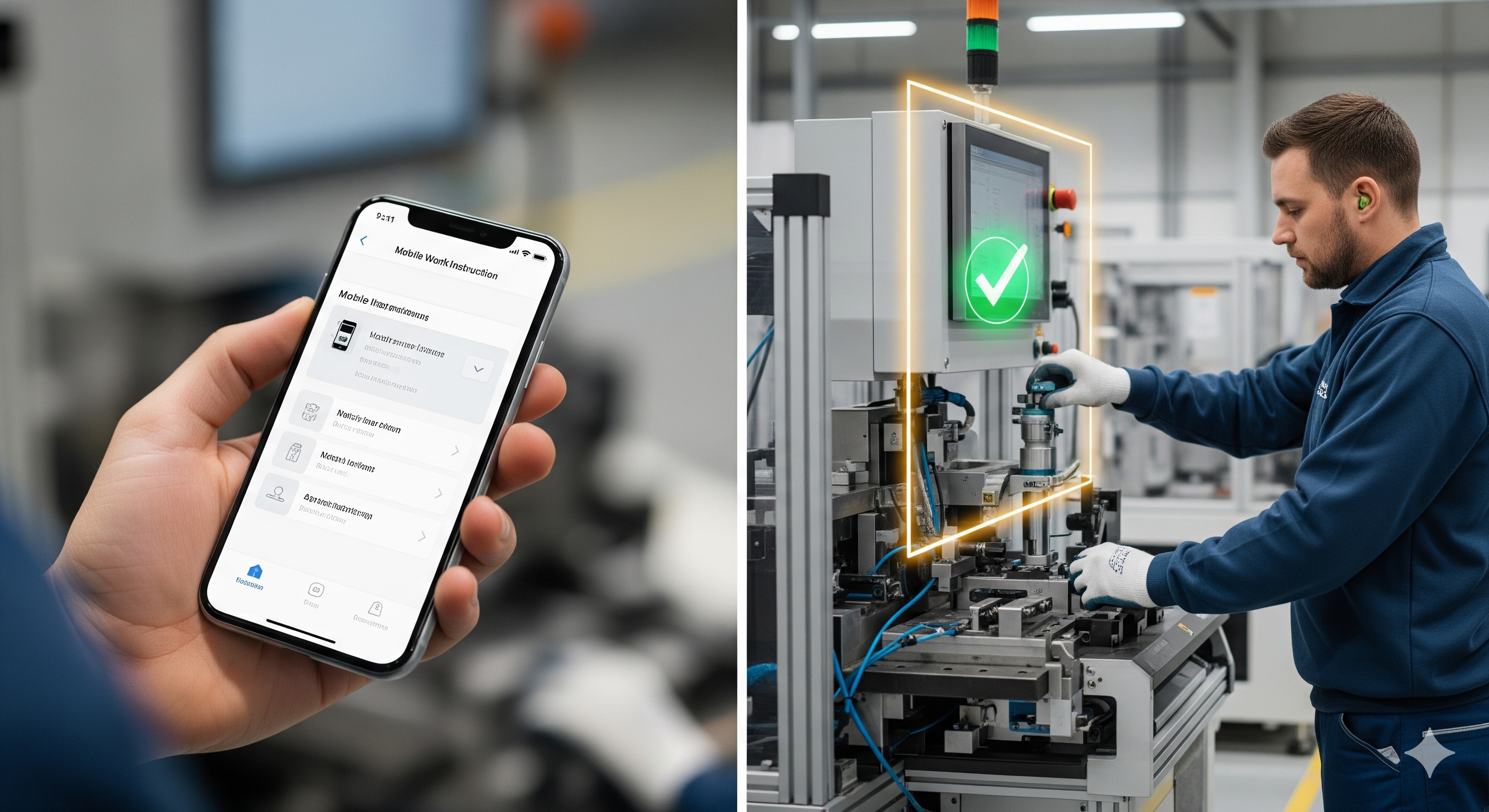
Looking for SwipeGuide alternatives after the L2L acquisition? Honest comparison of mobile work instruction platforms.

45% enterprise growth proves the documentation problem is solved. Now the real question: can your people actually do the work?

98% of manufacturers are exploring AI. Only 20% are ready. The real gap isn't in your tech stack — it's in whether your people can actually use it.

The real problem isn't which documentation platform you use—it's the gap between documented and executed.
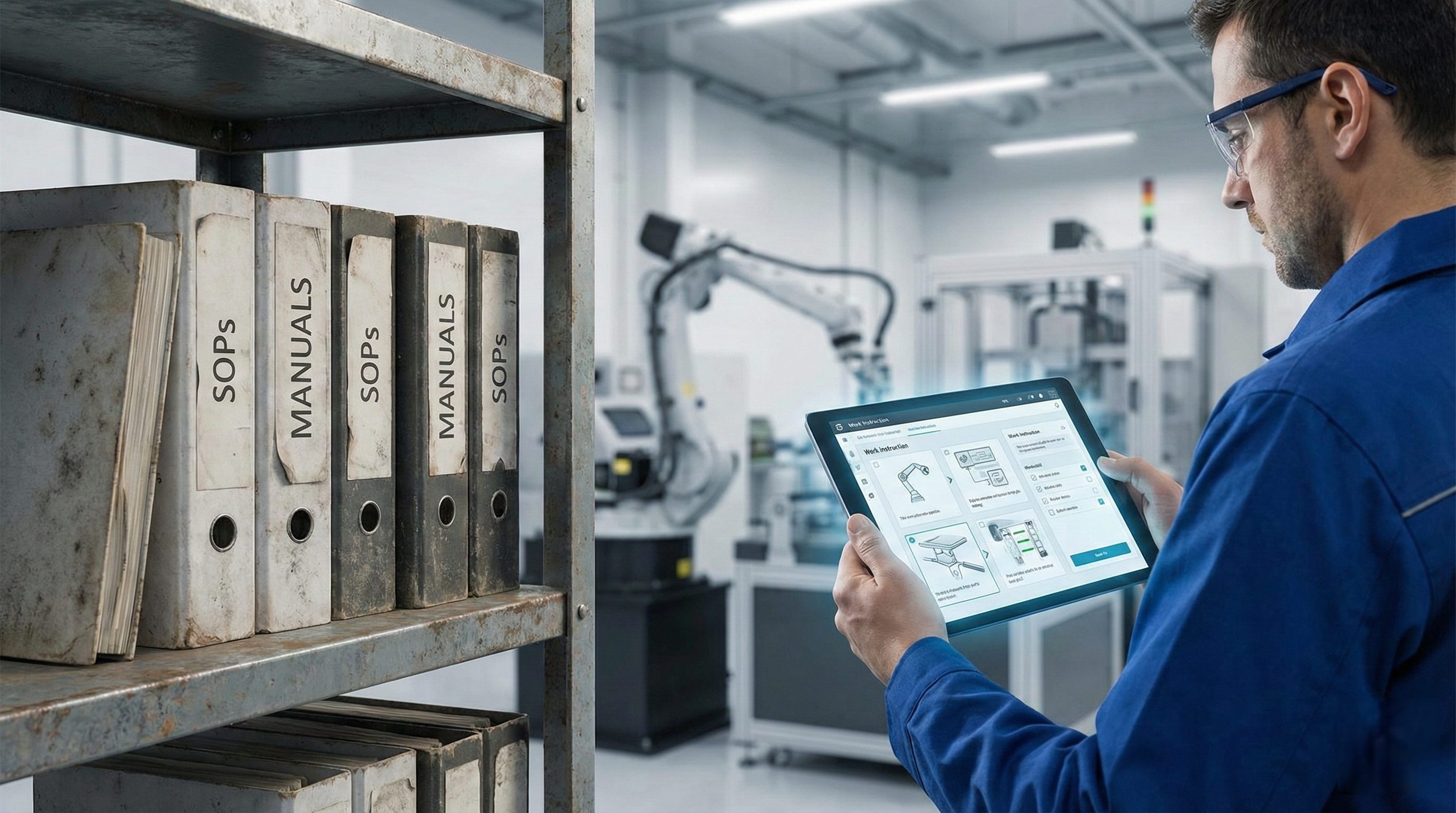
Digital beats paper on accessibility, but both share the same blind spot: they document what to do without proving anyone can do it.
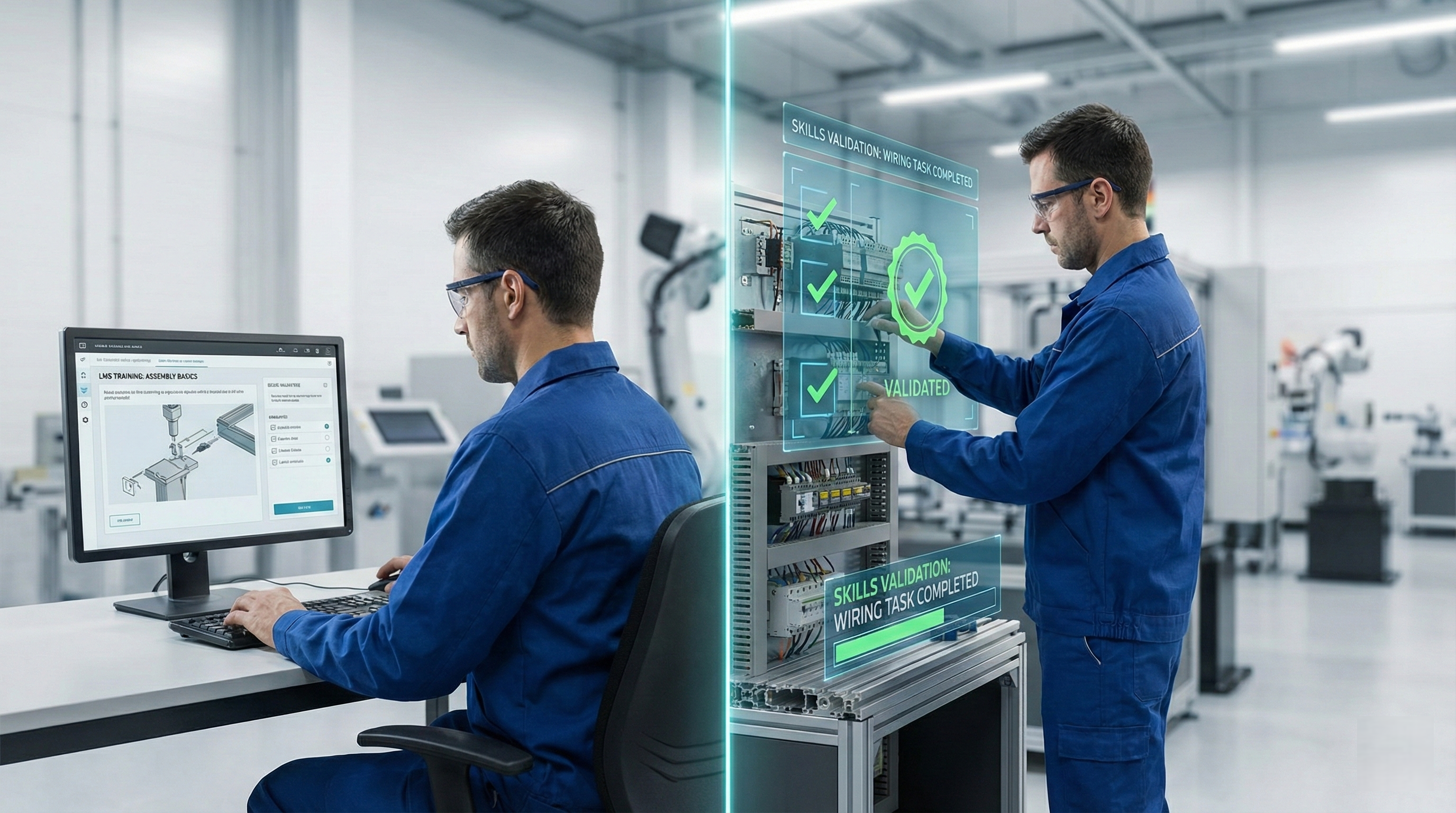
An LMS tracks learning activities. Skills validation proves competency. They solve different problems—here's when you need both.

The future of knowledge transfer: How video-based learning with smart glasses and AI assessment is revolutionizing employee training.

How smart glasses are revolutionizing workplace documentation and training with hands-free, point-of-view video capture.
Warning signals that your SOPs aren't translating to shop floor competency.
Join 5,000+ training professionals who get our weekly newsletter on workforce development, AI, and operational excellence.
No spam. Unsubscribe anytime.